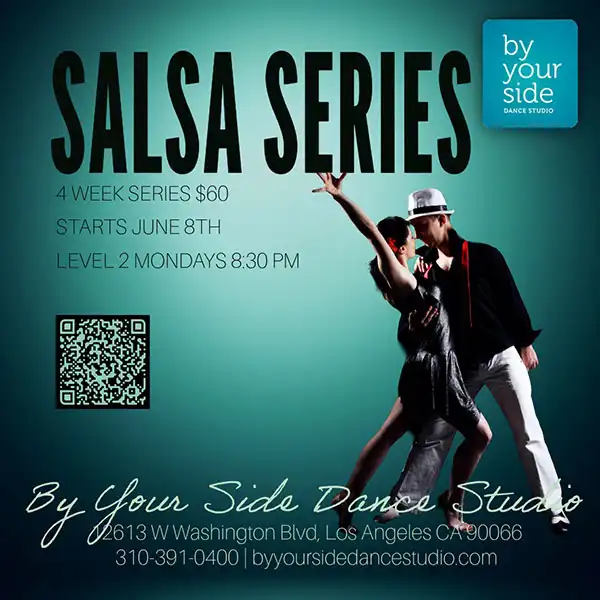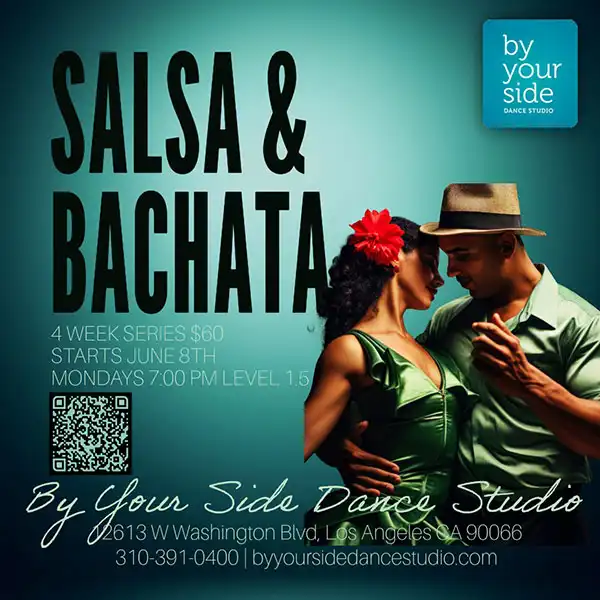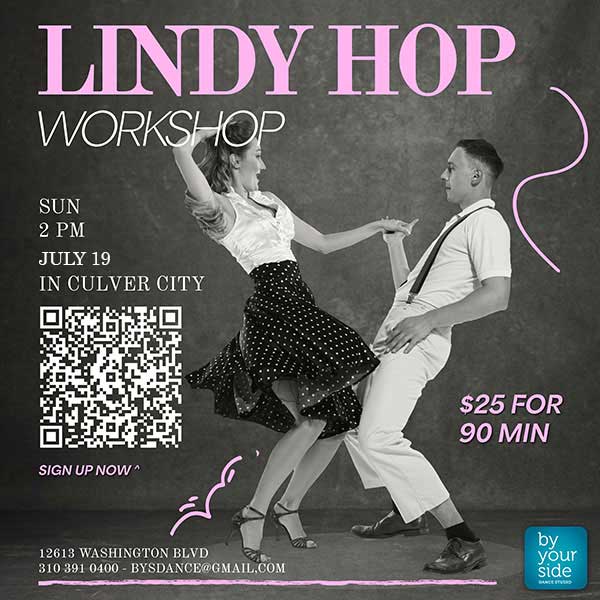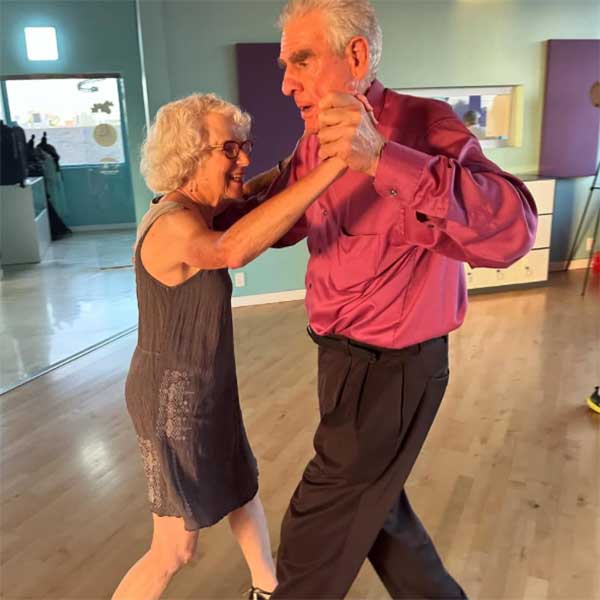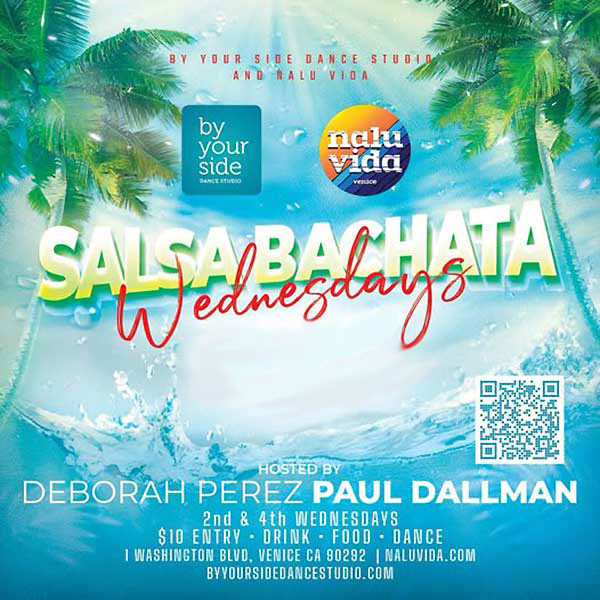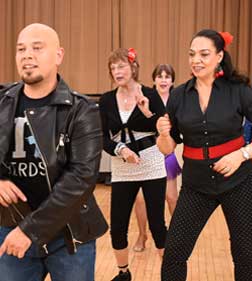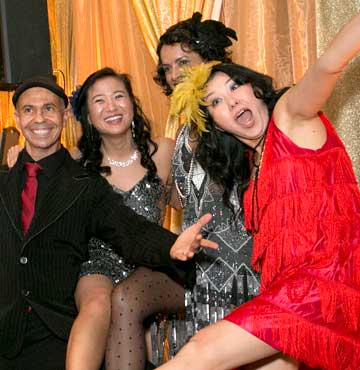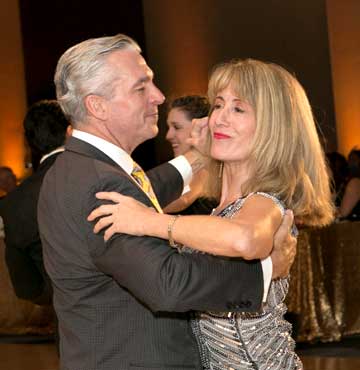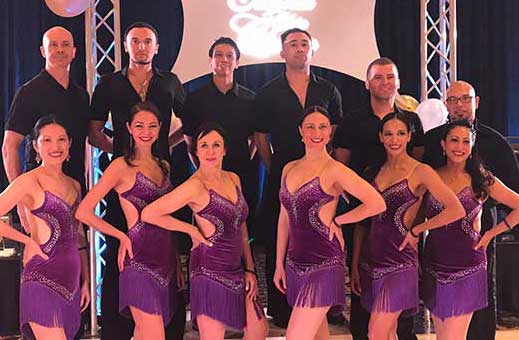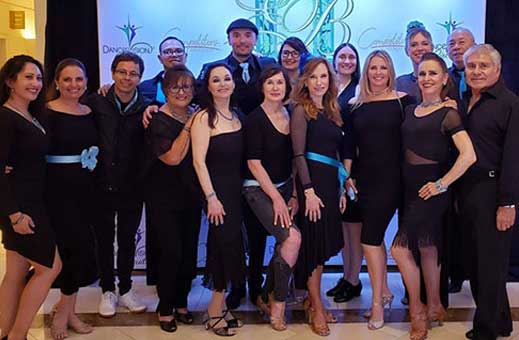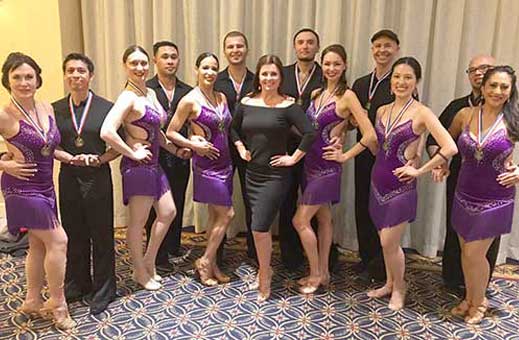
NEW to By Your Side Dance Studio! We need to promote ballroom dancing in Los Angeles, so we are offering a dance social for Ballroom Dancers the 4th Friday of every month. We will focus on ballroom dances such as the Foxtrot, Waltz, Rumba, Cha Cha, Swing and American Tango at these practice parties. Deborah will DJ the music and there will be free refreshments.
$7 Admission
7pm – 10:30pm
Free street parking after 6pm, free parking behind studio and metered parking in the new city lot beside the studio (free right now though.
No meters have been installed).
According to GigMasters survey, the 2012 Top Five Father Daughter Dance Songs and Father Daughter Wedding Songs are:
1. “I Loved Her First” by Heartland
2. “Wonderful World” by Louis Armstrong
3. “The Way You Look Tonight” by Frank Sinatra
4. “Cinderella” by Steven Curtis Chapman
5. “My Girl” by the Temptations tied with “Unforgettable” by Natalie Cole
Now see our Top Wedding Dance Songs First Dance Wedding Songs For 2012
Also included in the survey:
1. Chicken Dance
2. Electric Slide
3. Macarena
4. YMCA
5. Cotton Eye Joe

Featuring the most popular wedding dances such as the Waltz, Tango, Fox Trot and Swing. Over 2 hours of instruction and 26 dance patterns.
Our simple and fun Learn to Ballroom Dance DVD is a great way to learn a wedding dance on DVD!
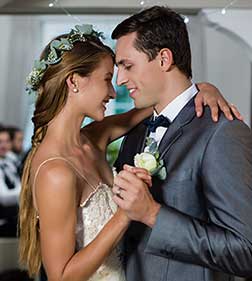
This is a list of the wedding dance songs By Your Side Dance Studio students have brought to us this year to choreograph their first dance to. If you are searching for YOUR first dance wedding songs, I hope this list will help jump start and guide your search. I’ve also listed dance styles that can work with each dance.
Many times couples come in with a wedding song that doesn’t really have a beat but the song has a lot of meaning to them. That’s okay! With our personalized wedding dance lessons we can custom choreograph wedding dance moves to ANY song. It doesn’t have to be a specific dance. By Your Side Dance Studio teachers are great at this! Leave it to us. Our wedding dance lessons in Los Angeles are fun and relaxing and we will make you look phenomenal on the dance floor.
Also, keep coming back to check the First Dance Wedding Songs 2012 list because I will update it every few days!
1. “Rhythm of Love” by Plain White Ts. – Foxtrot or Swing
2. “LaVie En Rose” by Louis Armstrong – Non-descript dance (sway, spins and dip)
3. “The Way You Look Tonight” by Frank Sinatra – Foxtrot
4. “I Could Not Ask For More” by Sara Evans – Night club 2-step
5. “Come Away With Me” by Nora Jones – Waltz
6. “Assassin’s Tango” from Mr. & Mrs. Smith – Tango
7. “Clear Skies” by Keane – Swing, Rumba or Foxtrot
8. “Love You Madly” by Cake – Salsa, Swing or Rumba
9. “I’m Glad There Is You” by Sarah Vaughan – Non-descript dance (sway, spins and dip)
10.“I’ve Had The Time Of My Life” Bill Medley & Jennifer Wares – Salsa
11.“How About You” by Frank Sinatra – Foxtrot or Swing
12.“Big Jet Plane” by Lady of the Sunshine – Foxtrot, Swing or Rumba
13.“Lucky” by Jason Mraz –Foxtrot, Swing or Rumba
14. Isn’t She Lovely” by Stevie Wonder – Rumba, Swing or Foxtrot
15. “La Javanaise” by Serge Gainsbourg – Viennese Waltz
16. “Snow Patrol” by Run – Slow Foxtrot
17. “Come Fly With Me” by Frank Sinatra – Foxtrot, Swing
18.”You Are The Best Thing” by Ray Lamontagne – Foxtrot, Swing
19.”Far Away” by Nickelback
20.”Happy Just To Dance With You” by the Beatles
21.”We Are In Love” by Harry Connick, Jr.
22.”Best Of My Love” by The Emotions
23.”All The Things Your Are” by Ella Fitzgerald
24.”Swept Away” by Avett Brothers
25.”The Best Is Yet To Come” by Michael Buble – Foxtrot, Swing
26.”At Last” by Etta James – Non-descript dance
27.”Good Life” by One Republic
28.”Two Less Lonely People” by Air Supply – Foxtrot, Swing
29.”True Love” by Pat Benetar
30.”These Arms of Mine” by Otis Redding – Step tap and sway to this song
31.”In The Mood” by Glenn Miller – Jitterbug (aka Single time East Coast Swing)
32.”Moonlight Serenade” by Glenn Miller – Foxtrot, Foxy, Sway
33.”Red Right Ankle” by Decemberists – Non-descript dance
34.”Save the Last dance” by Michael Buble – Rumba
35.”I Could Build My Whole Life Around You” by Marvin Gaye and Terri Terrell
36.”Better Man” by James Morrison
37.”Love is Strange”
38.”Valio la Pena” by Marc Anthony
Now see The Best Father Daughter Dance Songs and Father Daughter Wedding Songs for 2012
Featuring the most popular wedding dances such as the Waltz, Tango, Fox Trot and Swing. Over 2 hours of instruction and 26 dance patterns.
Our simple and fun Learn to Ballroom Dance DVD is a great way to learn a wedding dance on DVD!
By Your Side Dance Studio
12613 Washington Blvd.
Los Angeles, CA 90066
310-391-0400
2nd and 4th Friday of every month (Starting April 6, 2012)
7pm-8:30pm Ballroom Dance Practice Session
$3 for students of By Your Side Dance Studio, USA Dance and Dance Buddies Members
$5 for non-students of By Your Side Dance Studio
2,000 sq. ft. dance floor
Ballroom By The Bay
(Santa Monica Women’s Club)
1210 4th Street
Santa Monica, CA 90401
Every Wednesday – Dance lesson 7-7:40.
Open dancing until 11pm
$12.00 general admission
$10.00 USA Dance ID
$10.00 Dance Buddies ID
$5.00 students w/ID
3,000 sq. ft. dance floor
Granada Pavillion
11128 Balboa Blvd.
Granada Hills, CA 91344
818-831-1934
Ballroom Dance every Friday night
8pm – 11:30pm Open dancing
$14 General Admission
5500 Sq Ft (main hall)
2100 Sq Ft (aux hall)
Granada Pavillion
11128 Balboa Blvd.
Granada Hills, CA 91344
818-831-1934
Fifth Saturday of every month.
8:00 – 8:30pm Lesson
8:30 – 11:30pm Open dancing
$14.00 general admission
$12.00 Dance Buddies
5500 Sq Ft (main hall)
2100 Sq Ft (aux hall)
Culver City Veterans Memorial Hall
4117 Overland Avenue
Culver City, CA
USADANCE-LA.org
Approx. every 6th Sunday
6:30 – 7pm Lesson
7-10pm Dancing
$15 Members
$25 Non-members
$7 Under 25
Moose Lodge
357 W. Arden Ave
Glendale, CA
626-823-8830
1st Friday of every month
8-11pm
$12 general admission
$10 Dance Buddies ID
$10 USA Dance ID
Ballroom dancing no longer means stepping on someone’s toes at your cousin’s wedding. What was once considered stodgy has become sleek, sexy — even cool.
ABC’s “Dancing with the Stars,” originally a summer series, became a surprise blockbuster –19 million viewers tuned in last week. All over America, people are putting on their dancing shoes and changing their lives. And the show is giving the dancers, some of them called B-list celebrities, a career jump-start.
One of last season’s stars, John O’Hurley, now has a full dance card. He’s on Broadway, playing the lead in “Chicago.” He credits his terrific tango with his new lease on life.
“Well, it certainly has helped,” he said. “And it accounts for the size of the paycheck, I’ll tell you that.”
Tatum O’Neal, voted off in a tearful moment early in this season’s competition, didn’t have to cry for long. She popped up on “Entertainment Tonight” with a new gig as an entertainment reporter.
And then there’s Master P, a last-minute fill-in for his son, rapper Lil’ Romeo, who was injured while playing basketball. The judges knew he couldn’t dance, but viewers kept on voting him back. He is suddenly a crossover household name.
Katrina Szish, an editor at Us Weekly, said that viewers can relate to these celebrities — stumbling and klutzy at the beginning, elegant and graceful at the end.
“The celebrities are the surrogates for us. They’re actually the guinea pigs for us,” Szish said.
Partner dancing has been sneaking up on us. The 1992 movie, “Strictly Ballroom,” won a top prize at the Cannes Film Festival and breathed life into a pastime many thought of as stuffy and out-of-date.
Many say the revival gained momentum two years ago with the movie “Shall We Dance?,” starring Jennifer Lopez and Richard Gere. In “Mr. and Mrs. Smith,” Brad Pitt and Angelina Jolie’s steamy dance shows ballroom is definitely not for sissies. And then there is the recent documentary, “Mad Hot Ballroom,” about a dance competition for inner-city, public school kids in New York City that has audiences rooting for the underdogs.
“We’ve seen sort of a pop cultural collision of interest in ballroom dancing,” said Szish. “It works sort of like fashion trends. Somehow everybody around the world suddenly decides this is it, this is the trend.”
Arthur Murray, one of the oldest chains of dance instruction studios, said enrollment is up 30 percent, on top of a 15 percent rise the year before.
“It is something that is softer and gentler than everything else that we’re exposed to these days,” Szish said. “And I think the fact that there is some level of comfort in it, there is some sort of a retro comfort in it, is what makes all of us gravitate toward it.”
Even college kids are figuring out the appeal of dancing with a partner — both the rules and the romance.
Shira, a member of the ballroom dance team at Columbia University in New York, said, “You’re actually in contact with another human being. There’s something really satisfying about that.”
Yev and Rachel, also members of the team, became a couple on and off the dance floor.
“I think it’s a great way to meet, you know, meet a girl,” Yev said. “It’s really nice.”
Marilyn Agrelo, the director of “Mad Hot Ballroom,” said maybe it’s time for people to touch again on the dance floor.
“I think we’re living in really challenging times, there’s a lot of political dissent in the country and political division,” she said. “Ballroom dancing… makes people feel secure. I think it brings people to a place that makes them feel safe and …civilized.”
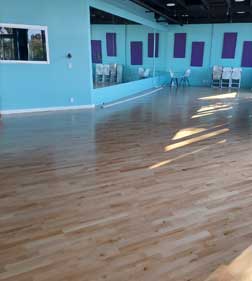
Los Angeles, California, March 10, 2012. Due to the recent popularity of ballroom dancing, By Your Side Dance Studio has doubled their dance studio space to meet the increased demand for ballroom dance classes and ballroom dance lessons in Los Angeles. The increased space now allows for two ballroom dance classes to be held simultaneously as well as creating a generous over 2000 square foot dance floor for social ballroom dances and private dance lessons.
More and more people are looking to learn to dance as ballroom dancing hits the mainstream with hit TV shows such as “Dancing With The Stars” and “So You Think You Can Dance”. As Deborah Fields Perez, dance studio owner and director remarks, “There has been such an increase in ballroom dance lessons in Los Angeles, that the dance studio expansion was absolutely necessary to provide more dance space for the variety of adult dance classes and ballroom dance lessons that we provide. We truly believe that our expansion and new floating hardwood dance floor helps position us as the best ballroom dance studio in Los Angeles.”
In addition to the larger space for ballroom dance lessons, the dance studio also installed a brand new oak hardwood floating dance floor which provides the necessary cushion and padding to protect a ballroom dancer’s knees and joints as they dance. Deborah Fields Perez says “We definitely want to be the best ballroom dance studio in Los Angeles, so the dance floor we installed is the highest quality and the same dance floor as used on ABC’s smash hit “Dancing With The Stars”.”
A long time student comments, “The expanded dance studio is really amazing! I love the brand new dance floor and the extra space for our ballroom dance lessons and social dances.”
video clip of the group class before our monthly beginner salsa/swing party
SALSA/SWING DANCE PARTY every 2nd Saturday of every month in our remodeled studio, so get your salsa shoes cleaned up and brush the bottoms for a night of great dancing and food!
TWO ROOMS! Salsa, Cha Cha in one room and East and West Coast Swing in the other!

Hosted by:
Deborah Fields Perez and Laura Canellias


$15 for Class and Party (Class is from 8-9pm)
$10 for Party only (Party is from 9-12midnight)
Free Parking in lot behind studio and lots of street parking. (free after 6pm)
Address:
12613 Washington Blvd.
Los Angeles, CA 90066
310-391-0400
www.byyoursidedancestudio.com


Use It or Lose It: Dancing Makes You Smarter
Richard Powers
For centuries, dance manuals and other writings have lauded the health benefits of dancing, usually as physical exercise. More recently we’ve seen research on further health benefits of dancing, such as stress reduction and increased serotonin level, with its sense of well-being.
Then most recently we’ve heard of another benefit: Frequent dancing apparently makes us smarter. A major study added to the growing evidence that stimulating one’s mind can ward off Alzheimer’s disease and other dementia, much as physical exercise can keep the body fit. Dancing also increases cognitive acuity at all ages.
You may have heard about the New England Journal of Medicine report on the effects of recreational activities on mental acuity in aging. Here it is in a nutshell.
The 21-year study of senior citizens, 75 and older, was led by the Albert Einstein College
of Medicine in New York City, funded by the National Institute on Aging, and published in the New England Journal of Medicine. Their method for objectively measuring mental acuity in aging was to monitor rates of dementia, including Alzheimer’s disease.
The study wanted to see if any physical or cognitive recreational activities influenced mental acuity. They discovered that some activities had a significant beneficial effect. Other activities had none.
They studied cognitive activities such as reading books, writing for pleasure, doing crossword puzzles, playing cards and playing musical instruments. And they studied physical activities like playing tennis or golf, swimming, bicycling, dancing, walking for exercise and doing housework.
One of the surprises of the study was that almost none of the physical activities appeared to offer any protection against dementia. There can be cardiovascular benefits of course, but the focus of this study was the mind. There was one important exception: the only physical activity to offer protection against dementia was frequent dancing.
Reading – 35% reduced risk of dementia
Bicycling and swimming – 0%
Doing crossword puzzles at least four days a week – 47%
Playing golf – 0%
Dancing frequently – 76%.
This was greatest risk reduction of any activity studied, cognitive or physical.
Quoting Dr. Joseph Coyle, a Harvard Medical School psychiatrist who wrote an accompanying commentary: “The cerebral cortex and hippocampus, which are critical to these activities, are remarkably plastic, and they rewire themselves based upon their use.”
And from from the study itself, Dr. Katzman proposed these persons are more resistant to the effects of dementia as a result of having greater cognitive reserve and increased complexity of neuronal synapses. Like education, participation in some leisure activities lowers the risk of dementia by improving cognitive reserve.
Our brain constantly rewires its neural pathways, as needed. If it doesn’t need to, then it won’t.
Aging and memory
When brain cells die and synapses weaken with aging, our nouns go first, like names of people, because there’s only one neural pathway connecting to that stored information. If the single neural connection to that name fades, we lose access to it. So as we age, we learn to parallel process, to come up with synonyms to go around these roadblocks. (Or maybe we don’t learn to do this, and just become a dimmer bulb.)
The key here is Dr. Katzman’s emphasis on the complexity of our neuronal synapses. More is better. Do whatever you can to create new neural paths. The opposite of this
is taking the same old well-worn path over and over again, with habitual patterns of thinking and living our lives.
When I was studying the creative process as a grad student at Stanford, I came across the perfect analogy to this:
The more stepping stones there are across the creek, the easier it is to cross in your own style.
The focus of that aphorism was creative thinking, to find as many alternative paths as possible to a creative solution. But as we age, parallel processing becomes more critical. Now it’s no longer a matter of style, it’s a matter of survival — getting across the creek at all. Randomly dying brain cells are like stepping stones being removed one by one. Those who had only one well-worn path of stones are completely blocked when some are removed. But those who spent their lives trying different mental routes each time, creating a myriad of possible paths, still have several paths left.
The Albert Einstein College of Medicine study shows that we need to keep as many of those paths active as we can, while also generating new paths, to maintain the
complexity of our neuronal synapses.
Why dancing?
We immediately ask two questions:
Does this mean all kinds of dancing, or is one kind of dancing better than another?
That’s where this particular study falls short. It doesn’t answer these questions as a stand-alone study. Fortunately, it isn’t a stand-alone study. It’s one of many studies, over decades, which have shown that we increase our mental capacity by exercising our cognitive processes. Intelligence: Use it or lose it. And it’s the other studies which fill in the gaps in this one. Looking at all of these studies together lets us understand
the bigger picture.
The essence of intelligence is making decisions. And the concluding advice, when it comes to improving your mental acuity, is to involve yourself in activities which require split-second rapid-fire decision making, as opposed to rote memory (retracing the same well-worn paths), or just working on your physical style.
One way to do that is to learn something new. Not just dancing, but anything new. Don’t worry about the probability that you’ll never use it in the future. Take a class to challenge
your mind. It will stimulate the connectivity of your brain by generating the need for new pathways. Difficult and even frustrating classes are better for you, as they will create a greater need for new neural pathways.
Then take a dance class, which can be even better. Dancing integrates several brain
functions at once, increasing your connectivity. Dancing simultaneously involves kinesthetic, rational, musical and emotional processes.
What kind of dancing?
Let’s go back to the study:
Bicycling, swimming or playing golf – 0%
reduced risk of dementia
But doesn’t golf require rapid-fire decision-making? No, not if you’re a long-time player. You made most of the decisions when you first started playing, years ago. Now the game is mostly refining your technique. It can be good physical exercise, but the study showed it led to no improvement in mental acuity.
Therefore do the kinds of dance where you must make as many split-second decisions as possible. That’s key to maintaining true intelligence.
Does any kind of dancing lead to increased mental acuity? No, not all forms of dancing will produce this benefit. Not dancing which, like golf or swimming, mostly works on style or retracing the same memorized paths. The key is the decision-making. Remember, Jean Piaget suggested that intelligence is what we use when we don’t already know what to do.
We wish that 25 years ago the Albert Einstein College of Medicine thought of doing side-by-side comparisons of different kinds of dancing, to find out which was better. But we can figure it out by looking at who they studied: senior citizens 75 and older, beginning in 1980. Those who danced in that particular population were former Roaring Twenties dancers (back in 1980) and then former Swing Era dancers (today), so the kind of dancing most of them continued to do in retirement was what they began when they were young:
freestyle social dancing — basic foxtrot, swing, waltz and maybe some Latin.
I’ve been watching senior citizens dance all of my life, from my parents (who met at a Tommy Dorsey dance), to retirement communities, to the Roseland Ballroom in New York. I almost never see memorized sequences or patterns on the dance floor. I mostly see easygoing, fairly simple social dancing — freestyle lead and follow. But freestyle social dancing isn’t that simple! It requires a lot of split-second decision-making, in both the lead and follow roles.
I need to digress here:
I want to point out that I’m not demonizing memorized sequence dancing or style-focused pattern-based ballroom dancing. I sometimes enjoy sequence dances myself, and there are stress-reduction benefits of any kind of dancing, cardiovascular benefits of physical exercise, and even further benefits of feeling connected to a community of dancers. So all dancing is good.
But when it comes to preserving mental acuity, then some forms are significantly better than others. When we talk of intelligence (use it or lose it) then the more decision-making we can bring into our dancing, the better.
Who benefits more, women or men?
In social dancing, the follow role automatically gains a benefit, by making hundreds of split-second decisions as to what to do next. As I mentioned, women don’t “follow”, they interpret the signals their partners are giving them, and this requires intelligence and decision-making, which is active, not passive. This benefit is greatly enhanced by dancing with different partners, not always with the same fellow. With different dance partners, you have to adjust much more and be aware of more variables. This is great for staying smarter longer.
But men, you can also match her degree of decision-making if you choose to do so. (1) Really notice your partner and what works best for her. Notice what is comfortable for her, where she is already going, which moves are successful with her and what aren’t, and
constantly adapt your dancing to these observations. That’s rapid-fire split-second decision making. (2) Don’t lead the same old patterns the same way each time. Challenge yourself to try new things. Make more decisions more often. Intelligence: use it or lose it.
And men, the huge side-benefit is that your partners will have much more fun dancing with you when you are attentive to their dancing and constantly adjusting for their comfort and continuity of motion.
Dance often
Finally, remember that this study made another suggestion: do it often. Seniors who did crossword puzzles four days a week had a measurably lower risk of dementia than those who did the puzzles once a week. If you can’t take classes or go out dancing four times a week, then dance as much as you can. More is better.
And do it now, the sooner the better. It’s essential to start building your cognitive reserve now. Some day you’ll need as many of those stepping stones across the creek as possible. Don’t wait — start building them now.
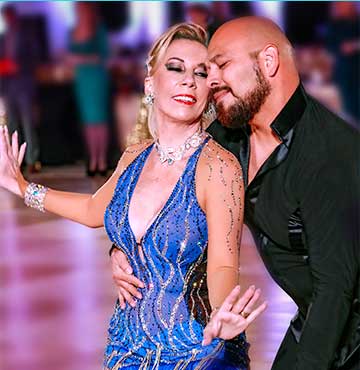
The Emerald Ball Competition is coming up! This competition is a By Your Side Dance Studio favorite! If you are interested in competing, let your instructor know a.s.a.p. The competition is coming up and you will want plenty of time to prepare!
Basic information:
Emerald Ball
www.emeraldball.com
ORGANIZERS:
Wayne and Donna Eng
DATES:
May 3rd – May 6th 2012
HOTEL:
Airport Hilton Towers
5711 W. Century Blvd.
Los Angeles, CA 90045
Hotel Phone: 310-410-4000
ALL Detailed information can be found at www.emeraldball.com