Give the Gift of Dance - Purchase A Dance Lesson Gift Certificate
Experience the Magic of Ballroom Dancing. Free half hour private lesson and consultation.
Dance Like a Pro! It's Easy and Fun! 75% off new student dance package. Limited time only.
Learn Everthing from Salsa to Swing. Your first group class is free!
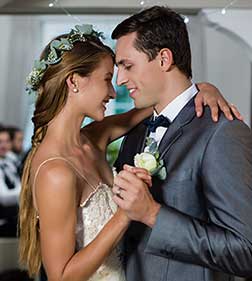
Amaze Everyone with the Perfect Wedding Dance! Free half hour dance lesson and consultation.

Latest News & Events

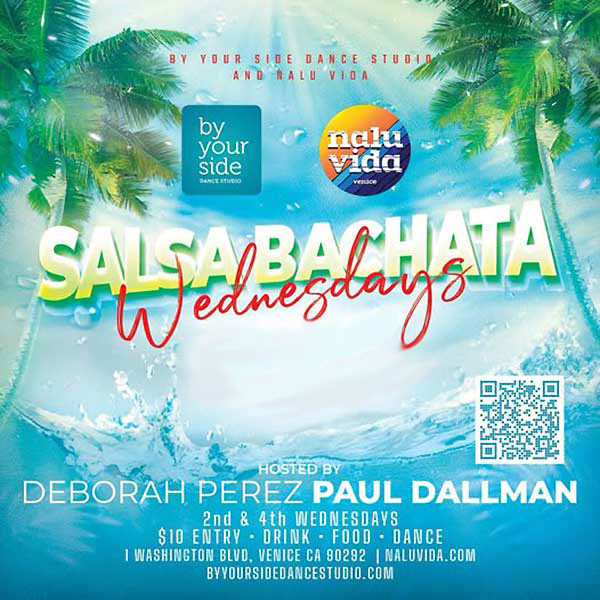
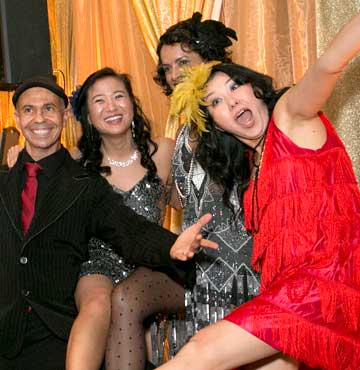
Salsa/Latin Dance Party 2nd Saturday of every month @ By Your Side Dance Studio


SALSA/LATIN DANCE PARTY every 2nd Saturday of every month in our remodeled studio, so get your salsa shoes cleaned up and brush the bottoms for a night of great dancing and food!

TWO ROOMS!  Salsa, Cha Cha, Rumba, Merengue and Rumba!

Hosted by:
Deborah Fields Perez and Laura Canellias

$15 for Class and Party (Class is from 8-9pm)
$10 for Party only (Party is from 9-12midnight)

Free Parking in lot behind studio and lots of street parking.  (free after 6pm)

Address:
12613 Washington Blvd.
Los Angeles, CA 90066
310-391-0400
www.byyoursidedancestudio.com

Posted in Events, News, Photos | Leave a comment

Dancing Makes You Smarter!


Use It or Lose It:  Dancing Makes You Smarter

Richard Powers

For centuries, dance manuals and other writings have lauded the health benefits of dancing, usually as physical exercise.  More recently we’ve seen research on further health benefits of dancing, such as stress reduction and increased serotonin level, with its sense of well-being.

Then most recently we’ve heard of another benefit:  Frequent dancing apparently makes us smarter.  A major study added to the growing evidence that stimulating one’s mind can ward off Alzheimer’s disease and other dementia, much as physical exercise can keep the body fit.  Dancing also increases cognitive acuity at all ages.

You may have heard about the New England Journal of Medicine report on the effects of recreational activities on mental acuity in aging.   Here it is in a nutshell.

The 21-year study of senior citizens, 75 and older, was led by the Albert Einstein College
of Medicine in New York City, funded by the National Institute on Aging, and published in the New England Journal of Medicine.  Their method for objectively measuring mental acuity in aging was to monitor rates of dementia, including Alzheimer’s disease.

The study wanted to see if any physical or cognitive recreational activities influenced mental acuity.  They discovered that some activities had a significant beneficial effect.  Other activities had none.

They studied cognitive activities such as reading books, writing for pleasure, doing crossword puzzles, playing cards and playing musical instruments.  And they studied physical activities like playing tennis or golf, swimming, bicycling, dancing, walking for exercise and doing housework.

One of the surprises of the study was that almost none of the physical activities appeared to offer any protection against dementia.  There can be cardiovascular benefits of course, but the focus of this study was the mind. There was one important exception:  the only physical activity to offer protection against dementia was frequent dancing.

Reading – 35% reduced risk of dementia
Bicycling and swimming – 0%
Doing crossword puzzles at least four days a week – 47%
Playing golf – 0%
Dancing frequently – 76%.

This was greatest risk reduction of any activity studied, cognitive or physical.

Quoting Dr. Joseph Coyle, a Harvard Medical School psychiatrist who wrote an accompanying commentary: “The cerebral cortex and hippocampus, which are critical to these activities, are remarkably plastic, and they rewire themselves based upon their use.”

And from from the study itself, Dr. Katzman proposed these persons are more resistant to the effects of dementia as a result of having greater cognitive reserve and increased complexity of neuronal synapses.  Like education, participation in some leisure activities lowers the risk of dementia by improving cognitive reserve.

Our brain constantly rewires its neural pathways, as needed.  If it doesn’t need to, then it won’t.

Aging and memory

When brain cells die and synapses weaken with aging, our nouns go first, like names of people, because there’s only one neural pathway connecting to that stored information.  If the single neural connection to that name fades, we lose access to it.  So as we age, we learn to parallel process, to come up with synonyms to go around these roadblocks.  (Or maybe we don’t learn to do this, and just become a dimmer bulb.)

The key here is Dr. Katzman’s emphasis on the complexity of our neuronal synapses.  More is better.  Do whatever you can to create new neural paths.  The opposite of this
is taking the same old well-worn path over and over again, with habitual patterns of thinking and living our lives.

When I was studying the creative process as a grad student at Stanford, I came across the perfect analogy to this:

The more stepping stones there are across the creek, the easier it is to cross in your own style.

The focus of that aphorism was creative thinking, to find as many alternative paths as possible to a creative solution.  But as we age, parallel processing becomes more critical.  Now it’s no longer a matter of style, it’s a matter of survival — getting across the creek at all.  Randomly dying brain cells are like stepping stones being removed one by one.  Those who had only one well-worn path of stones are completely blocked when some are removed.  But those who spent their lives trying different mental routes each time, creating a myriad of possible paths, still have several paths left.

The Albert Einstein College of Medicine study shows that we need to keep as many of those paths active as we can, while also generating new paths, to maintain the
complexity of our neuronal synapses.

Why dancing?

We immediately ask two questions:

  • Why is dancing better than other activities for improving mental capabilities?

Does this mean all kinds of dancing, or is one kind of dancing better than another?

That’s where this particular study falls short.  It doesn’t answer these questions as a stand-alone study.  Fortunately, it isn’t a stand-alone study.  It’s one of many studies, over decades, which have shown that we increase our mental capacity by exercising our cognitive processes. Intelligence: Use it or lose it.  And it’s the other studies which fill in the gaps in this one.  Looking at all of these studies together lets us understand
the bigger picture.

Some of this is discussed here (the page you may have just came from) which looks at
intelligence in dancing.  The essence of intelligence is making decisions.  And the concluding advice, when it comes to improving your mental acuity, is to involve yourself in activities which require split-second rapid-fire decision making, as opposed to rote memory (retracing the same well-worn paths), or just working on your physical style.

One way to do that is to learn something new.  Not just dancing, but anything new.  Don’t worry about the probability that you’ll never use it in the future.  Take a class to challenge
your mind.  It will stimulate the connectivity of your brain by generating the need for new pathways.  Difficult and even frustrating classes are better for you, as they will create a greater need for new neural pathways.

Then take a dance class, which can be even better.  Dancing integrates several brain
functions at once, increasing your connectivity.  Dancing simultaneously involves kinesthetic, rational, musical and emotional processes.

What kind of dancing?

Let’s go back to the study:
Bicycling, swimming or playing golf – 0%
reduced risk of dementia

But doesn’t golf require rapid-fire decision-making?  No, not if you’re a long-time player.  You made most of the decisions when you first started playing, years ago.  Now the game is mostly refining your technique.  It can be good physical exercise, but the study showed it led to no improvement in mental acuity.

Therefore do the kinds of dance where you must make as many split-second decisions as possible.  That’s key to maintaining true intelligence.

Does any kind of dancing lead to increased mental acuity?  No, not all forms of dancing will produce this benefit.  Not dancing which, like golf or swimming, mostly works on style or retracing the same memorized paths.  The key is the decision-making.  Remember
(from this page), Jean Piaget suggested that intelligence is what we use when we don’t already know what to do.

We wish that 25 years ago the Albert Einstein College of Medicine thought of doing side-by-side comparisons of different kinds of dancing, to find out which was better.  But we can figure it out by looking at who they studied: senior citizens 75 and older, beginning in 1980.  Those who danced in that particular population were former Roaring Twenties dancers (back in 1980) and then former Swing Era dancers (today), so the kind of dancing most of them continued to do in retirement was what they began when they were young:
freestyle social dancing — basic foxtrot, swing, waltz and maybe some Latin.

I’ve been watching senior citizens dance all of my life, from my parents (who met at a Tommy Dorsey dance), to retirement communities, to the Roseland Ballroom in New York.  I almost never see memorized sequences or patterns on the dance floor.  I mostly see easygoing, fairly simple social dancing — freestyle lead and follow.   But freestyle social dancing isn’t that simple!  It requires a lot of split-second decision-making, in both the lead and follow roles.

I need to digress here:
I want to point out that I’m not demonizing memorized sequence dancing or style-focused pattern-based ballroom dancing.  I sometimes enjoy sequence dances myself, and there are stress-reduction benefits of any kind of dancing, cardiovascular benefits of physical exercise, and even further benefits of feeling connected to a community of dancers.  So all dancing is good.

But when it comes to preserving mental acuity, then some forms are significantly better than others.  When we talk of intelligence (use it or lose it) then the more decision-making we can bring into our dancing, the better.

Who benefits more, women or men?

In social dancing, the follow role automatically gains a benefit, by making hundreds of split-second decisions as to what to do next.  As I mentioned on this page, women don’t “follow”, they interpret the signals their partners are giving them, and this requires intelligence and decision-making, which is active, not passive.  This benefit is greatly enhanced by dancing with different partners, not always with the same fellow.  With different dance partners, you have to adjust much more and be aware of more variables.  This is great for staying smarter longer.

But men, you can also match her degree of decision-making if you choose to do so.  (1) Really notice your partner and what works best for her.  Notice what is comfortable for her, where she is already going, which moves are successful with her and what aren’t, and
constantly adapt your dancing to these observations.  That’s rapid-fire split-second decision making.   (2) Don’t lead the same old patterns the same way each time.  Challenge yourself to try new things.  Make more decisions more often.  Intelligence: use it or lose it.

And men, the huge side-benefit is that your partners will have much more fun dancing with you when you are attentive to their dancing and constantly adjusting for their comfort and continuity of motion.

Dance often

Finally, remember that this study made another suggestion: do it often.  Seniors who did crossword puzzles four days a week had a measurably lower risk of dementia than those who did the puzzles once a week. If you can’t take classes or go out dancing four times a week, then dance as much as you can.  More is better.

And do it now, the sooner the better. It’s essential to start building your cognitive reserve now.  Some day you’ll need as many of those stepping stones across the creek as possible.  Don’t wait — start building them now.

Posted in News, Photos | Leave a comment

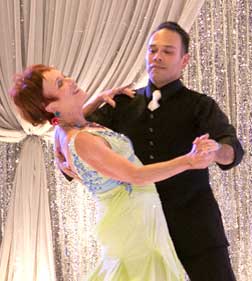
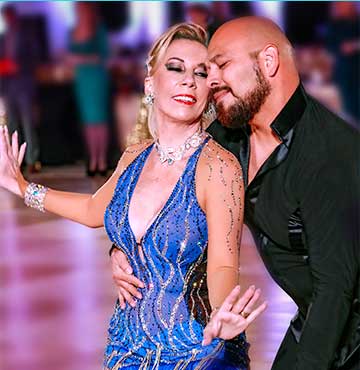
Deborah Fields Perez competition photo

Posted in Photos | 1 Comment

Emerald Ball Dance Competition

The Emerald Ball Competition is coming up!   This competition is a By Your Side Dance Studio favorite!  If you are interested in competing, let your instructor know a.s.a.p.  The competition is coming up and you will want plenty of time to prepare!

Basic information:
Emerald Ball
www.emeraldball.com

ORGANIZERS:
Wayne and Donna Eng

DATES:
May 3rd – May 6th 2012

HOTEL:
Airport Hilton Towers
5711 W. Century Blvd.
Los Angeles, CA 90045
Hotel Phone: 310-410-4000

ALL Detailed information can be found at www.emeraldball.com

Posted in News | Leave a comment

Group Class Schedule for 2012


This should be the final schedule for January 2012 with no more changes.

Sundays:

2pm Studio A – International Latin 2
3pm Both Studios - International Standard 1 & 2
Private Lessons held in Studio B

Mondays:
7pm Level 4 Ballroom (Silver American Style Smooth)
8pm Studio B – Salsa 1
9pm Studio A - Bachata 1 (with Raw Bachata Dance Company) starts January 16th
Private Lessons will be held in Studio A

Tuesdays:
7pm Studio A - Swing/Lindy 1 (Rotates with West Coast Swing 1 e/o month)
8pm Studio A- Swing/Lindy 2
9pm Salsa 2
Private Lessons will be held in Studio B

Wednesdays:
6pm Studio B – Salsa Shines
7pm Studio B – Argentine Tango 1
8pm Studio B – Argentine Tango 2
Private Lessons will be held in Studio B

Thursdays:
7pm Studio A – Salsa 2 (L.A. Style On1)
7pm Studio B – Mambo (N.Y. Style On2) (with Mambo Inc. Dance Company)
8pm Studio A – Salsa 3 (L.A. Style On1)
8pm Studio B – Mambo (N.Y. Style On2) (with Mambo Inc. Dance Company)

Fridays:
No Group Classes
Private lessons held in Studio A and B

Saturdays:
11am Studio B – Salsa Shines
12pm Studio A – Tap 1
1pm Studio A – Tap 2
2pm Ballroom 1
3pm West Coast Swing 2


Posted in News | Leave a comment

What is the Ballroom Dancing Medal System and How Does it Work?

Most professional ballroom studios teach using the Medal System.  This is an organized way of keeping track of your progress.   At the By Your Side Dance Studio, we use the DIVIDA Medal System produced by Dance Vision, a world-renowned dance organization.

The Medal System is broken into three major categories:
Bronze Level
Silver Level
and
Gold Level 

Your instructor keeps a personal folder for you which contains the dances you have chosen and a step list for each of those dances.  You and your instructor will keep track of your progress by checking off what you have learned as you progress.  Areas that are monitored are foot positions, footwork, timing, lead/follow and styling.  You always know where you stand with your dancing skills!

WHAT WILL EACH LEVEL DO FOR YOU?

Bronze Program

The Bronze Program is a full social dancing program.  You choose the dances you wish to excel in and your instructor teaches you the patterns, timing and techniques in those particular dances.  You will also strengthen your leading and following skills which leaves you feeling comfortable and capable on the dance floor.

Each level is broken down into four sections.  Here is an example of the Bronze breakdown:
Bronze I You learn the first few patterns of a dance.
Bronze II You continue to add to your repetoire.  You are introduced to styling at this level and continue to perfect your footwork.
Bronze III starts to get a little more advanced and you will find yourself becoming a sought after dance partner.
Bronze IV is known as the full Social Standard.  This is the time when you become an advanced social dancer.  This is where the true fun begins!

Some students prefer to learn only one dance, which is fine, but remember you will end up only being able to dance when a particular style of song is played.  If you follow the Medal System level by level and choose a variety of dances, you will become a well-rounded social dancer able to dance to anything that is played.  Many of the same patterns are/can be used in a variety of dances, which makes learning several dances easier.

The most popular dances chosen by students learning via the Medal System are Foxtrot, Tango, Waltz, Rumba, Swing and Cha Cha although any combination is fine.  Salsa and West Coast Swing are popular choices as well.

Silver Program

Silver is the dance standard with a high degree of styling and elaborate movements.  The Silver dancer will stand out, have more style and begin to look more professional on the dance floor. Continuity of movements makes a couple glide across the dance  floor with many natural directional changes. Styling, technique, balance  and control are a focus in this level.  Again, this level is broken down into smaller sections for easier learning: Silver I, Silver II, Silver III and Silver IV

Gold Program

The Gold Level is for the hobby dancer interested in performances,  exhibitions or competitions. You will not typically see this level danced on the social dance floor. Both partners must be advanced dancers in order to execute the intricate patterns. Choreography, styling, technique and  showmanship are a must in this standard.  This level requires dedication and many hours of lessons and practice time, but you will truly be regarded as an outstanding  dancer.

Getting started is easy. The first step is to schedule an introductory lesson with one of our instructors.  We will sit down with you before the lesson and determine what your short and long-term dancing goals are.  Once this is established, we can provide a plan that will help you reach your goals.  Call us today at 310-391-0400 or email us at bysdance@gmail.com


Posted in News | Leave a comment

By Your Side Dance Studio is Expanding!

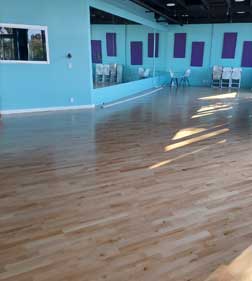
Great news! By Your Side Dance Studio is only three years old and we are already outgrowing our studio! We have taken over the space next to us which will double the size of the studio!  Stay tuned for photos and updates as we progress.

Lights up in studio all on

We couldn’t have done it without our students!  Thank you for having faith in us and loving how we do what we do!  It is your continued support that makes it all possible.

GO BY YOUR SIDE DANCE STUDIO AND STUDENTS!  We make a GREAT team!

New Door Decal

New Dance Flex Flooring

Posted in News, Photos | Leave a comment

New Children’s Book Pays Homage to Fred Astaire

I was thrilled to discover a well-loved children’s book displaying Fred Astaire’s image.  Growing up, I memorized nearly every dance he ever put on film.  Now I’m not saying I can dance anywhere near as great as Fred, Ginger, Rita or Syd, but that didn’t stop me from memorizing every move right down to the fingertips, so I fully understand where the writers motivation came from when she wrote this adorable, heart-warming book.

Alexander is a little boy with big dreams. Through a series of conversations with Dad from breakfast to bedtime, Alexander changes his name half a dozen times to match those of heroes he identifies with, including Theodore Roosevelt, Jackie Robinson, and wonderfully, Fred Astaire.

“I am FRED,” says Alexander, “the greatest, smoothest dancer who ever was!”

Jennifer Fosberry is the author of My Name Is Not Alexander, and Mike Litwin is
the creator of the delightful illustrations. Published by Sourcebooks in 2011, rave reviews indicate that the book charms the young reader in the style of its precursor, My Name Is Not Isabella, an award-winning celebration of great women in history by the same author.

Click here to learn about the Foxtrot dance or take a Foxtrot dance class today.

Posted in News | Leave a comment

Ballroom Dancing Classes in Los Angeles

Subject: Ballroom Dancing

You Can Do This! 

One great way to begin your ballroom dancing adventure is to begin with Foxtrot or Waltz before moving into the more difficult dances.  Another great method for learning is by using the interrelated system.  This is a way of learning where the same basic patterns can be used for a variety of dances.

Most studios offer private lessons, group classes and practice parties.  A balanced combination of all three will give you the quickest and best results, but if you are unsure of making the investment and want to start slowly, I recommend group classes to get your feet wet.  Most studios offer a discount if you sign up for more than one class at a time. For example, the By Your Side Dance Studio in West Los Angeles offers ten group classes for $130 which is $2 less per class than when you purchase individual classes for $15 each. (www.byyoursidedancestudio.com)

Group Classes Group Classes are an important addition to your private instruction. They give you the opportunity to dance with a variety of partners, develop good dance habits, and meet other students in the studio. In Group Classes we emphasize technique, style, and variation of patterns.

Private Lessons provide personalized instruction so you can learn the dance techniques that help you achieve your goals in dancing.

Practice Parties provide the necessary environment for practicing what you have learned while strengthening your leading and following skills by dancing with a variety of partners.

What to wear…..

As far as clothing, wear whatever is comfortable and gives you freedom of movement.  Men should wear leather sole shoes and ladies should wear a low heel that will stay securely on her feet.

Once you are hooked, and it will most likely happen, a great place to purchase dance shoes is Worldtone Dance Shoes located at 2138 Westwood Blvd in Los Angeles, CA. (www.worldtonedance.com)

Most studios offer opportunities for you to showcase what you have learned through annual Showcases.  For example, USA Dance-LA (www.usadancela.org) holds an annual showcase around September or October of every year.  Surrounding studios invite their students to perform choreographed dance routines just like what you see on Dancing with the Stars!  The students typically wear costumes and dance with their instructor or another student.

On a larger scale, dance organizations hold a variety of dance competitions throughout the world for students and professionals who wish to travel and compete.  One of my favorite dance competions is the Emerald Ball (www.emeraldball.com) which is organized by Wayne and Donna Eng.

Whether you wish to dance a little or a lot, there is a perfect place for you in the ballroom dancing world.  Anyone can ballroom dance!


Posted in News | 1 Comment

Dance Your Way to Health the Ballroom Way

Tips for getting exercise and learning dances like Foxtrot, Salsa, Swing and Tango and many more.

It’s so hard to get yourself out the door when you think about treadmills and dumbbells.  Everyone knows it’s so much easier to exercise when you are having fun.  Team sports are the most well known forms of fun exercise, but what if you’re looking for something a little more low impact, far more socially useful, and less reliant on a team?

Dancing is your answer.

Dancing of all types is an aerobic activity.  This means it gets your heart-rate going and burns calories.  The beauty of dance is that you only need a pair of feet to do it (I’ve even seen people in wheelchairs or on crutches who would argue you don’t even need those).

Dancing also improves posture, balance and coordination.  You’re not only developing a more beautiful body through exercise, you are learning how to better use that body.  This is something your companion will thank you for.

Ballroom and Latin dances, specifically at the beginner and intermediate levels, are also very low impact; this means there is little to no joint strain as associated with jogging or sports.  These dances also involve dancing with a partner which adds to the fun because of its social aspects.  Many students come for the exercise and stay for the cameraderie.

Getting started in Ballroom Dancing.

1. Pick a studio – The main thing to remember here is that you must enjoy getting the instruction.  If it feels like work, chances are you won’t keep doing it.

2. Plan out twice a week – For any skill you need repetition, so you should be dancing a minimum of an hour and a half per week.  Which, I may add, is less than the length of a movie.

3. Don’t quit – The toughest part about learning a physical skill is the practice.  You have to develop what is known as muscle memory, which takes longer than regular memory to build.  This stage of limbo can make the student feel awkward because their brain knows what they should be doing but their body is still trying to remember.

The best advice I can give you is to have as much fun as possible.  I personally believe that steps and technique are secondary to movement and fun.  So dance like no one is watching and don’t be too hard on yourself or your partner.  Have fun, and you’ll stay fit!

Posted in News | Leave a comment